
(And Why It Changes Your Life)
Do you struggle with saying no?
Maybe you:
- Say yes when you’re already overwhelmed
- Take on responsibilities that aren’t yours
- Feel guilty for setting boundaries
- Worry about disappointing people
If so, you’re not alone.
Many people are conditioned to believe that saying no is rude, selfish, or uncooperative. But the truth is this:
Learning how to say no is one of the most important boundary skills you can develop.
And it can completely change your life.
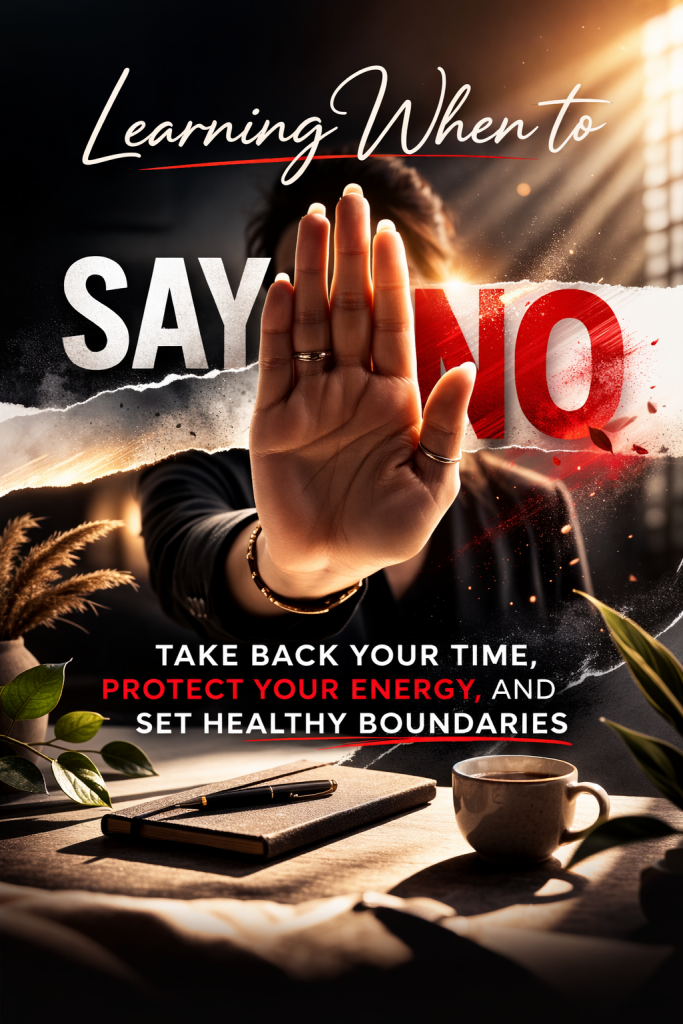
Why Is It So Hard to Say No Without Feeling Guilty?
Most of us were taught that:
- “Yes” makes you likable
- “Yes” makes you helpful
- “Yes” avoids conflict
While “no” feels negative.
If you tend to be a people pleaser, you may:
- Fear looking bad
- Hate letting others down
- Avoid conflict at all costs
So instead of setting boundaries, you overcommit.
And that’s where the real problem begins.
What Happens When You Always Say Yes
If you struggle to stop overcommitting, you might notice:
1. You’re Constantly Overwhelmed
There are only 24 hours in a day.
When you say yes to everything:
- Your schedule fills up
- Your priorities get pushed aside
- You lose control of your time
This is how burnout begins.
2. You Feel Resentful
Resentment is often a boundary issue.
If you regularly feel:
- Taken for granted
- Drained
- Frustrated
- Invisible unless you’re useful
It may not be that others are demanding.
It may be that you never said no.
3. You Sacrifice Your Own Needs
When you don’t protect your time, you start giving up:
- Sleep
- Downtime
- Exercise
- Personal goals
Setting boundaries isn’t selfish.
It’s necessary for your mental and emotional health.
Why Saying No Is a Powerful Boundary Skill
Here’s what most people don’t realize:
Saying no isn’t rejection.
It’s protection.
When you learn how to say no confidently:
- You regain control of your schedule
- You reduce stress and overwhelm
- You stop people pleasing
- You protect your energy
- Your yes becomes more meaningful
And something surprising happens:
People respect you more.
When you stop saying yes to everything, your time becomes valuable.
When Should You Say No?
You don’t need to refuse everything.
But you should strongly consider saying no when:
- It isn’t your responsibility
- You’re already too busy
- It drains your time or energy
- It goes against your values
- It makes you uncomfortable
- It hurts someone you care about
- You feel resentment before you even answer
Your emotional reaction is often your first clue.
If your gut says no, pause before you say yes.
How to Say No Politely Without Feeling Guilty
If you’re wondering how to say no politely and confidently, start here:
Keep it simple.
You don’t need a long explanation.
“No, thank you.”
“I’m not available.”
“I can’t commit to that right now.”
That’s enough.
Don’t over-apologize.
Over-apologizing weakens your boundary.
Be respectful — but firm.
Express Appreciation Without Backtracking
“That sounds like a great opportunity. I’m not able to take it on, but I appreciate you thinking of me.”
Kind. Clear. Final.
Give yourself time if needed.
If you struggle to answer immediately:
“Let me check my schedule and get back to you.”
This prevents automatic yes responses.
Why Learning How to Say No Changes Everything
When you stop automatically agreeing to everything, you create space.
Space for:
- Your health
- Your family
- Your goals
- Your rest
- Projects that actually matter to you
Saying no allows you to say yes to the right things.
And that shift is powerful.
Start With Awareness
You don’t have to transform overnight.
Just begin noticing:
- When you say yes out of guilt
- When resentment builds
- When you overextend yourself
Awareness is the first step to setting stronger boundaries.
The more you practice saying no, the easier it becomes.
And eventually, you’ll wonder why you didn’t start sooner.
Coming Next:
In the next post, we’ll cover specific scripts and real-life examples of how to say no at work, with family, and in relationships — without damaging trust.

Thank you for this blog, I struggle with all my life in saying no and not feeling bad about it. This what I have been working on this year!
Glad it helped . Please don’t feel guilty about saying NO , gradually you will adjust to doing it and feel so much better for saying it.