
In a world where we’re increasingly reliant on smartphones and digital devices, it’s easy to forget the importance of keeping an old-fashioned emergency contacts sheet. After all, we can quickly look up phone numbers with a few taps, right? However, in moments of crisis—when emotions are running high or technology fails—having a physical emergency contacts sheet can be a true lifesaver.
Here’s why every household should have a emergency contacts sheet and what it should include.
Why You Need an Emergency Contacts Sheet
- Tech Isn’t Always Reliable Power outages, dead batteries, or lost phones can leave us without access to the contacts we store digitally. An emergency contacts sheet, printed and easily accessible, doesn’t rely on technology, so it’s always there when you need it.
- Quick Access During Stressful Situations Emergencies can happen at any time, and during these stressful moments, our minds aren’t always as sharp as usual. Whether it’s a medical emergency, a house fire, or a natural disaster, having a clearly written emergency contacts sheet means anyone—family members, babysitters, or neighbors—can immediately reach the right people without fumbling through a phone.
- Helps First Responders and Bystanders In case of an emergency where you or someone else may be unable to communicate (e.g., injury, illness, or unconsciousness), first responders can easily locate the emergency contacts sheet to notify family members, doctors, or other necessary individuals.
- Crucial for Babysitters and Caregivers If you have children or elderly family members, an emergency contacts sheet is essential for babysitters, nannies, or caregivers. It ensures they know exactly who to call if something unexpected happens while they’re in charge.
- Vital for Families with Special Needs For families with members who have specific medical conditions or special needs, an emergency contacts sheet is particularly important. It can include vital information about allergies, medications, and the best hospitals or doctors to contact.
What to Include on Your Emergency Contacts Sheet
A well-organized emergency contacts sheet should be clear, concise, and easy to read. Here’s what to include:
- Family Members’ Contact Information
- Emergency Services
- 911 (or your country’s emergency number)
- Local police station
- Fire department
- Poison control hotline
- Medical Contacts
- Family doctor or pediatrician
- Specialist doctors (if applicable)
- Nearest hospital or urgent care center
- Dentist’s office
- Emergency Contacts Outside the Home
- Names and numbers of neighbors or nearby relatives
- Trusted friends who live close by and can help quickly
- Utility Companies
- Electric company
- Water and gas providers
- Insurance companies (home, auto, health)
- Special Instructions If needed, you can add any special notes such as medical conditions, allergies, or locations of important documents like insurance papers or medications.
- Where to Place Your Emergency Contacts Sheet
- Make sure your emergency contacts sheet is easily visible and accessible. Good places to post or keep a copy include:
- On the refrigerator door
- In a family command center
- Near the home phone (if you have one)
- In an emergency kit or first-aid kit
This list might seem more extensive than what you typically need, so starting with a simplified version could be more practical.
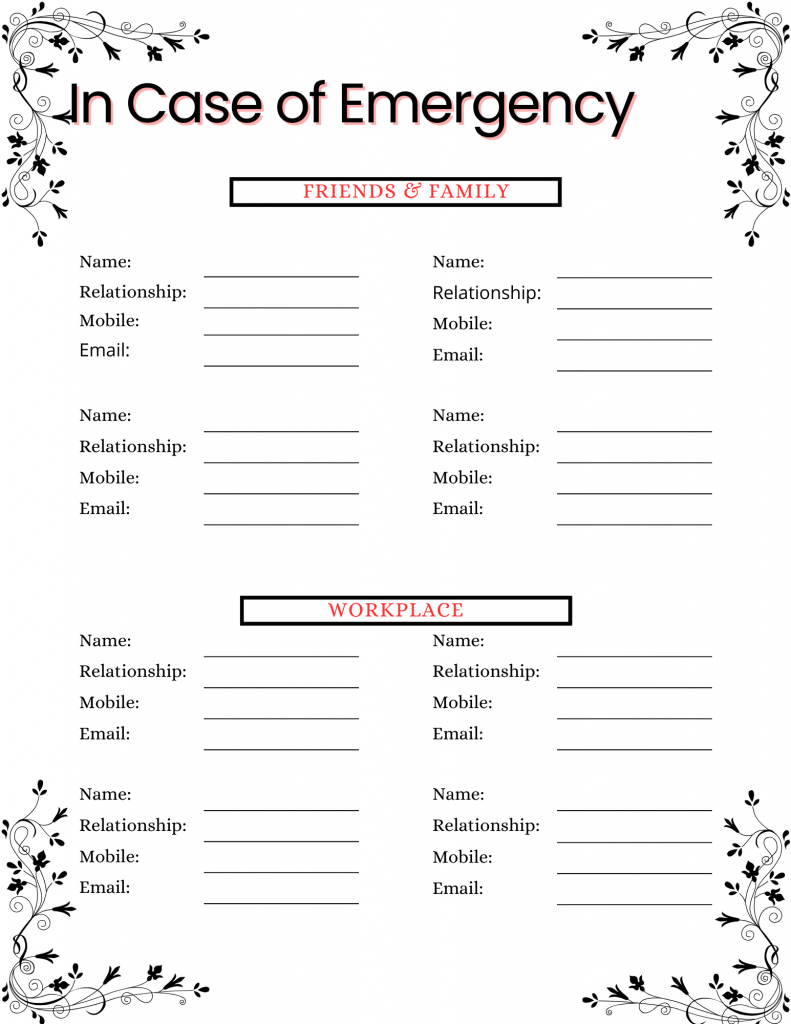
It’s also a good idea to keep a copy in your car and ensure every family member has access to one in their room or on their person if they have special medical needs.
Update Regularly
Life changes quickly, and so should your emergency contacts sheet. Every few months, make sure you update the sheet to reflect any new phone numbers, doctors, or neighbors. Having outdated information can be as risky as having no information at all.
Conclusion
In an emergency, every second counts. A simple, printed emergency contacts sheet can be the difference between chaos and quick, effective action. By having one easily accessible in your home, you’re not just protecting your own family, but also empowering anyone who might be present during a crisis to take the right steps. It’s a small step that can have a huge impact when it matters most.